Dmytro CianBay · 26.11.2026 · 12 min read
Pet supplies ecommerce website on WooCommerce in 2027: repeat purchases, subscriptions and automation
Plan an online pet store with food catalogues, repeat orders, subscriptions, delivery, regulatory considerations and WooCommerce development from €600.
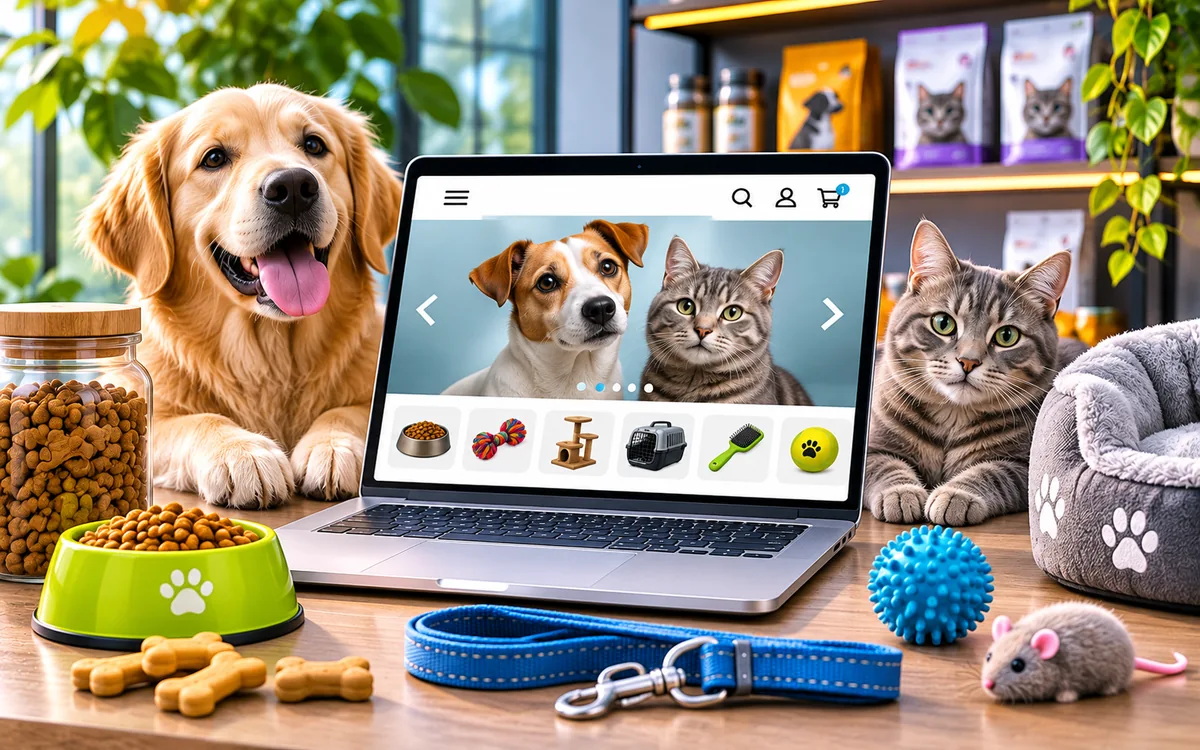
Unlike many other retail categories, pet supplies can become part of a customer's regular household budget. A person who discovers a reliable source of their preferred cat food may return every month, provided the product is consistently available and arrives on time. Toys, carriers, bedding and grooming accessories create additional opportunities, but a retailer cannot treat every product as if it follows the same purchasing cycle.
A WooCommerce pet store can combine one-off purchases, convenient reordering and optional recurring deliveries on a website owned by the business. This article explores the features worth prioritising in 2027, the commercial decisions behind them and the regulatory distinctions that matter when selling in Europe or the United States. It is intended for business owners commissioning a website rather than developers installing a plugin.
Contents
- Design the shop around replenishment and customer trust
- Catalogue architecture and category-specific attributes
- Product information that helps buyers choose responsibly
- Make repeat orders easy before investing in subscriptions
- Optional subscriptions and recurring payment management
- Inventory, batch traceability and order management
- Delivery, payment and unit economics
- European Union and US regulatory considerations
- Search visibility and a sustainable acquisition strategy
- How much does a WooCommerce pet store cost and where to order one?
- Acceptance testing before the first public order
- FAQ
Design the shop around replenishment and customer trust
A customer choosing a first dog bed needs different information from a customer buying the same bag of food for the tenth time. The first wants reassurance about measurements, material and suitability; the second wants an accurate stock indication and a fast way to reorder. A successful pet shop accommodates both without forcing returning customers through unnecessary steps.
Start by classifying the assortment into consumables, durable products and goods with special storage or shipping conditions. Dry food, litter and waste bags may generate repeat orders. Aquariums, large cages and furniture are more likely to require careful packaging or dedicated delivery rates. Refrigerated or frozen goods require a separate fulfilment assessment. A single shipping promise across these categories can be misleading or financially unsustainable.
For a small retailer, a clear and dependable assortment may be more profitable than thousands of poorly maintained listings. Expansion should follow the availability of reliable supplier information and a fulfilment process that can meet the promises made on the website.
Catalogue architecture and category-specific attributes
Organise navigation around the animals and shopping tasks customers recognise: dogs, cats, birds, small animals and aquatics, followed by food, accessories and care categories. Dog food filters might include brand, life stage, product type, pack size and price, while harnesses require dimensions, materials and fitting information. Filters should be relevant to the category rather than identical throughout the store.
WooCommerce supports global product attributes and variable products. A single formula available in three pack sizes can be represented with separate variation SKUs, prices and stock levels. Different formulas may warrant separate listings to avoid confusion over ingredients and intended use. Use a consistent unit system and show the appropriate local units where necessary. A European customer may compare price per kilogram, while a US shopper may expect pounds or ounces.
A well-designed catalogue also supports the import of supplier data and the export of product feeds. A product identifier should stay consistent when the packaging changes, except where the manufacturer has assigned a different identifier. Avoid merging two products merely because their names look similar.
Product information that helps buyers choose responsibly
Pet food product pages should reproduce reliable information from the actual product label: ingredients, analytical or nutritional information as applicable, intended use, net quantity, feeding information and storage instructions. The precise mandatory fields depend on the jurisdiction and product classification. Where a formula or label changes, update the corresponding product record and check that the images match.
A retailer should not use generated copy to invent disease-treatment claims, nutritional guarantees or veterinary endorsements. A dietetic pet food is not automatically a medicated feed, and neither category should be confused with a veterinary medicinal product. Where a product has a special regulatory status, obtain the approved information from the manufacturer and appropriate local advice before listing it.
For equipment and accessories, measurements, materials, safety instructions and photographs of important details can reduce avoidable returns. The store can offer a route to contact customer service, but a product finder should not claim to diagnose a health condition or prescribe a treatment. Owners with clinical questions should consult a veterinary professional.
Make repeat orders easy before investing in subscriptions
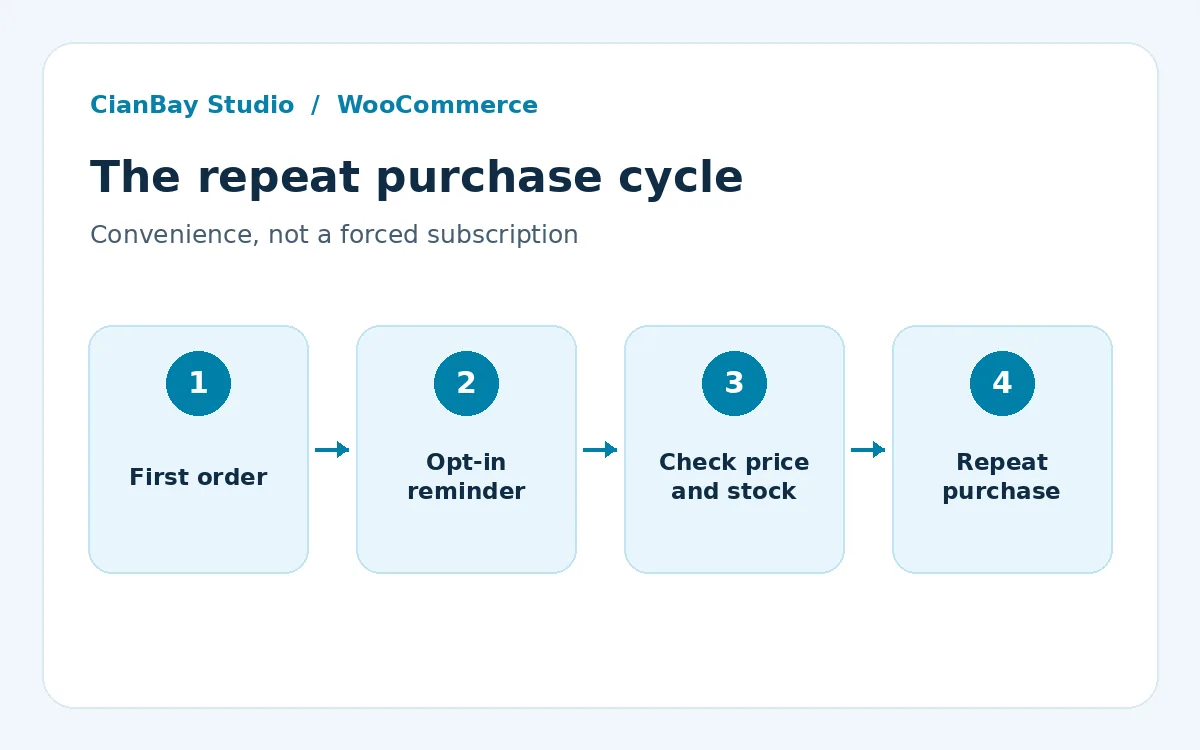
A subscription is not the only way to build retention. An account area that displays previous orders and offers a convenient reorder action can remove much of the friction. A saved favourite or a reminder chosen by the customer may be sufficient for a business that has not yet established predictable inventory and delivery capacity.
Consider a shopper who buys a particular pack of litter every six weeks. A reminder scheduled at the shopper's request can provide a link to the current product and price without committing them to a charge. The customer remains in control. Marketing messages and reminders should be managed according to applicable consent and privacy rules; transactional order notifications should be distinguished from promotional email.
Reordering must still validate the current stock, price and delivery options. If the preferred formula is unavailable, the store should ask before suggesting any substitution, not automatically replace it with a different food. This matters particularly for animals on specific diets.
Optional subscriptions and recurring payment management
An autoship programme can be valuable when customers want a predictable supply of repeat-use products. Present it as an explicit choice alongside a normal purchase. Make the interval, payment schedule, initial and recurring prices, shipping charges, renewal terms and cancellation process understandable before the customer commits.
WooCommerce Subscriptions can create renewal orders and work with compatible payment gateways. Automatic renewal depends on the specific gateway, payment method, merchant eligibility and supported country. Manual renewals are another option. The store owner should be able to distinguish an unsuccessful charge from an order that has been paid and is ready for fulfilment.
Plan how customers can skip a shipment, pause or cancel the service, update addresses and change payment details. A stock shortage should trigger a defined communication process rather than an undisclosed substitute or a charge for goods the business cannot deliver. Price changes must be communicated according to the applicable contract and law. Recurring sales are only beneficial if the fulfilment operation can reliably meet the recurring commitment.
Inventory, batch traceability and order management
Food inventory is not just a count of packages. Retailers may need batch numbers, expiry dates, supplier records and links between incoming stock and customer orders. Standard WooCommerce stock management operates at product or variation level; specialised lot and expiry tracking may require an extension or integration with an inventory system.
Define what should happen when stock is damaged, recalled, reserved for an unpaid order or too close to expiry to meet the store's own policy. Inventory accuracy is especially important when an online store and a physical shop sell from the same warehouse. A CRM can consolidate orders and support requests, but it should not be mistaken for a complete warehouse management system.
For multiple suppliers, define which source is authoritative for each field. A supplier feed may provide a recommended retail price and availability but not enough detail to replace the verified product label. Automated imports should not overwrite trusted descriptions or silently reactivate a discontinued product. Monitoring failed imports and conflicting records is part of operating the store, not just a one-off development task.
Delivery, payment and unit economics
Shipping costs matter because some of the most frequently purchased pet products are heavy. A bag of food can be easy to pick and pack yet expensive to deliver. A fragile aquarium or bulky cage may require a completely different carrier service. Define rates based on the actual parcel profile and service area, including any surcharges or exclusions, before promising free shipping.
In Europe, local courier services, parcel lockers and pickup points can be appropriate for smaller orders where supported. Large or temperature-sensitive shipments require separate evaluation. In the United States, carriers such as UPS, FedEx and USPS may suit different package profiles, depending on contracts and restrictions. Display the available options before the customer commits to a purchase, rather than revealing an unexpected fee after checkout.
Consider an illustrative order worth €60 with €15 gross profit before fulfilment. Picking and packaging cost €2, payment processing €1.50 and the seller absorbs €8 shipping. Only €3.50 remains before advertising, returns, taxes and overhead. These are hypothetical numbers, not quoted carrier rates. A repeat order can be unprofitable if the subscription discount and shipping subsidy consume the entire margin.
European Union and US regulatory considerations
In the EU, Regulation (EC) No 767/2009 governs the marketing and use of feed, including information requirements for distance selling. Article 11 addresses mandatory information provided before a distance contract, subject to specified exceptions. The retail sale of pet food is outside the scope of the feed hygiene Regulation (EC) No 183/2005, but that does not remove other product safety, labelling or national obligations. Importing, manufacturing, repackaging or wholesaling may trigger different requirements.
Veterinary medicinal products are a separate category. Article 104 of Regulation (EU) 2019/6 generally permits distance retail of non-prescription veterinary medicines by authorised suppliers, subject to the law of the Member State concerned. The common EU logo and link to the official retailer list are required where applicable. Member States may impose additional restrictions and may authorise certain prescription distance sales under specific national safeguards. Do not assume a licence in one jurisdiction permits all products to be sold across borders.
In the US, animal food labels and claims fall under FDA oversight, with additional state requirements potentially applying. FDA distinguishes animal foods from products that meet the definition of drugs, so a therapeutic marketing claim should be checked rather than added casually. Prescription veterinary drugs require a separate review of federal and state pharmacy and veterinary rules. For recurring online purchases, the Restore Online Shoppers' Confidence Act requires clear material terms, informed consent and a simple way to stop recurring charges; state automatic renewal laws may impose additional duties.
The website also needs appropriate consumer information, privacy controls and returns procedures. EU distance contracts generally have a 14-day withdrawal right, subject to defined exceptions. Do not automatically classify all pet food or accessories as non-returnable. These points are current as of 26 November 2026 and are planning considerations, not a substitute for legal review in each sales jurisdiction before launch.
Search visibility and a sustainable acquisition strategy
A pet shop benefits from search pages that match genuine shopping intent, such as adult cat dry food or travel carriers for small dogs. Build useful category descriptions, accessible filters and product pages with accurate prices, availability and identifiers. Control the indexing of filter combinations so that the catalogue does not produce thousands of near-identical URLs.
Google Merchant Center and product structured data can support discovery for eligible items. Advertising restrictions differ from retail laws, particularly for regulated products. A merchant must check the platform's own policies before submitting a product feed. Social advertising and marketplaces can complement an independent store, but the business should not rely on a single paid acquisition channel.
Measure repeat purchase rate by customer cohort, gross profit after fulfilment, acquisition cost, failed renewal orders and cancellation reasons. Revenue from subscribers is not the same as contribution profit. A useful retention programme is one that customers choose to stay with because it is convenient and reliable.
How much does a WooCommerce pet store cost and where to order one?
CianBay Studio offers basic WooCommerce store development from €600 and a combined WooCommerce, CRM and basic SEO solution from €1200. The starting price applies to a standard store scope, not unlimited catalogue preparation, specialised subscriptions, custom warehouse software or licensing support. Actual pricing depends on the assortment, number of variants, supplier data, integrations and delivery rules. Domain registration, hosting, paid extensions and provider charges are separate where applicable.
WooCommerce core has no mandatory platform subscription fee, although operating a store still involves ongoing costs. When requesting a proposal, provide sample products, supplier files, delivery regions and your preferred payment model. If you already sell through another channel, include information about stock synchronisation and existing customer workflows. Decide whether automatic recurring payments are needed immediately or whether a simpler reorder service is enough for the first release.
CianBay works with clients in Ukraine and internationally. We can plan the storefront and its integrations around your commercial model, rather than forcing every pet retailer into the same feature package. Regulatory classification, licences and approved legal text remain the merchant's responsibility and should be agreed before the regulated part of the catalogue goes live.
WooCommerce development · Payment integrations · Combined CRM solution · Pricing · Discuss your project
Acceptance testing before the first public order
Agree on business scenarios rather than a list of installed plugins. Test a mobile purchase, a heavy parcel, an unavailable product and a repeat order with a changed price. If subscriptions are included, test cancellation, failed renewals and a shortage before enabling automatic billing for real customers. Make sure customer service staff can identify the relevant order and issue a refund using the agreed process.
An accessible storefront is useful to customers who navigate with a keyboard or need larger text. Clear labels, readable product information and understandable error messages also improve the everyday mobile shopping experience. These practical criteria help the business evaluate the finished website rather than judging it solely by appearance.
FAQ
Can I offer food subscriptions without automatic payments?
Yes. Manual renewal orders or customer-selected reminders can provide a simpler starting point. Automated charges require a supported payment setup and proper consent.
Does WooCommerce provide batch and expiry tracking by default?
Core stock management tracks quantities for products and variations. Dedicated lot, expiry and recall workflows generally require a compatible extension or external system.
Can I sell veterinary medicines through the same store?
Only if the applicable rules and authorisations permit the product and sales method. Separate regulatory categories and restrict purchasing where needed. Do not launch restricted listings simply because the checkout technically works.
Is every integration included in the €600 starting price?
No. The base store is a starting scope. Supplier automation, subscriptions, warehouse integrations and specialised compliance features are estimated separately.
Sources
- WooCommerce: Subscriptions payment gateways
- WooCommerce: Subscription renewal process
- Google: Product data specification
- Google: Merchant listing structured data
- Regulation (EC) 767/2009
- Regulation (EC) 183/2005
- Regulation (EU) 2019/6
- Your Europe: Consumer rights
- FDA: Animal Food Labeling and Pet Food Claims
- FTC: Restore Online Shoppers’ Confidence Act