Dmytro CianBay · 23.11.2026 · 6 min read
Dental Practice Website in 2027: Online Booking, Local SEO and Patient Enquiries
What a dental practice website needs: dentist profiles, services, pricing, online appointments, local SEO, reviews and patient data protection.

A potential patient searches for a dentist, lands on a mobile page and wants quick answers: does this practice offer the treatment they are considering, where is it located, who are the clinicians and how can they arrange a visit? A polished landing page with stock imagery but no clear answers can lose an enquiry before the receptionist hears about it.
A dental clinic website in 2027 should support actual patient journeys, not just look impressive. This guide addresses small practices, multi-specialty clinics and groups with several locations. It focuses on web design, content, booking and discoverability, not medical advice or a promise of new patients.
The first screen needs practical answers
Show the practice name, location, telephone number, opening hours and a visible appointment action. Highlight genuine service categories, not a long list of unsupported claims. If there are multiple branches, provide a clear location selector. Emergency appointment wording should reflect actual staffing and availability rather than an unsupported guarantee.
Use genuine photographs and current clinician profiles where permission has been obtained. Explain accessibility, parking, step-free access or language support if these facilities really exist. Avoid claims such as “painless for everyone” or “the best dentist” unless there is clear defensible evidence.
Essential pages for a dental clinic
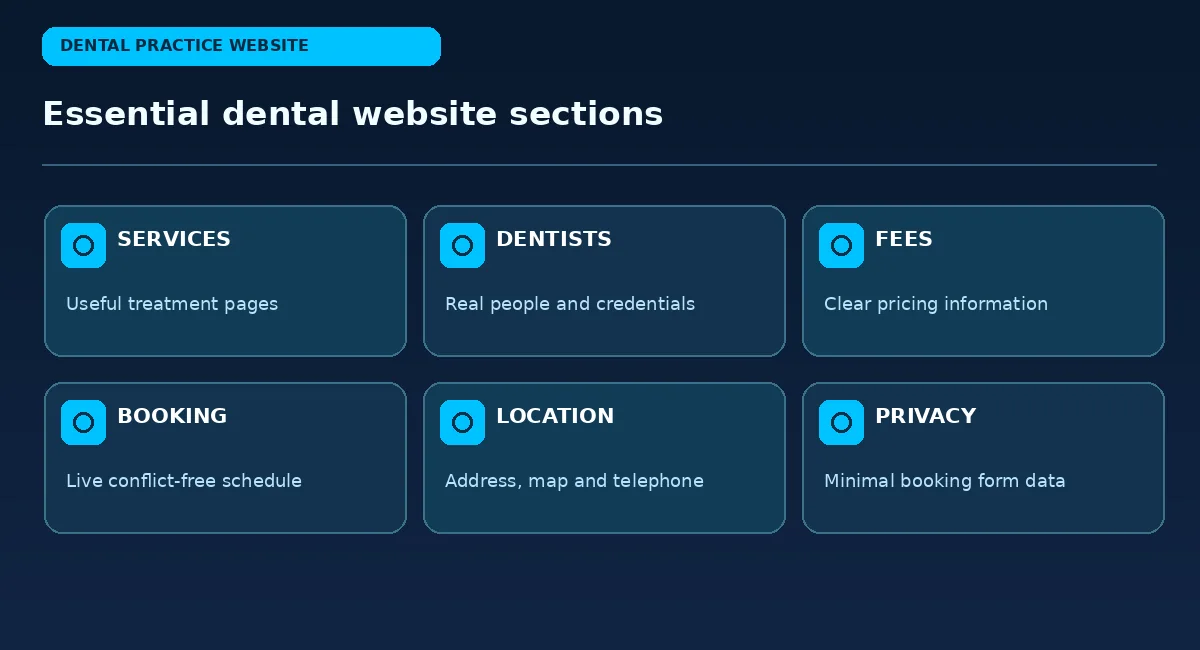
- Services: examinations, hygiene, orthodontics, restoration, implants and other treatments actually provided, with separate useful pages for major services.
- Meet the team: professional qualifications, registration where appropriate, experience, clinical interests, availability and accurate photos.
- Fees: published prices or ranges, inclusions, consultation costs and a clear explanation of when treatment-specific estimates are prepared.
- Locations: individual branch addresses, directions, accessibility details, telephone numbers and opening hours.
- For patients: appointment process, cancellation policy, practical first-visit information and contact channels.
Separate service pages should answer distinct questions rather than repeat the same paragraph with different city names. Do not create doorway-style pages targeting every neighbouring district. The best website structure reflects real locations and services.
Online appointments and scheduling rules
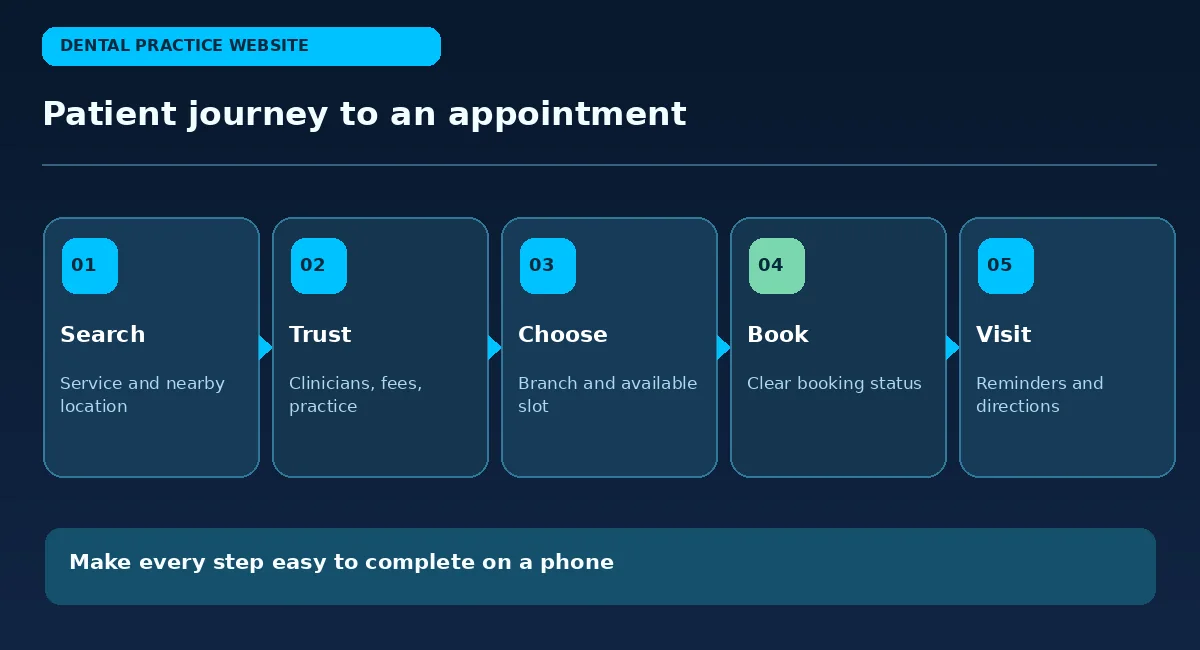
A useful booking journey lets patients choose their location, visit type, clinician if appropriate, date and available time. Confirmation should distinguish an actual reserved slot from an enquiry awaiting staff approval. Send a clear status message, with reminders only when the patient has agreed to relevant communication.
The underlying calendar must account for appointments of differing lengths, rooms, staff availability, leave and conflicting bookings. Some procedures need an initial assessment before the clinic can determine the correct appointment length. For these cases, book an assessment rather than pretending to schedule a fully specified treatment.
A WordPress website can use appointment booking features or connect to practice-management software. Before choosing a plugin, check two-way synchronisation, cancellation workflows, time zones, notifications and what happens when the external service is unavailable.
Local SEO and Google Business Profile
People search using phrases such as “dentist near me”, a neighbourhood name or a specific service. Keep name, address, phone and working hours consistent between the site and the practice's Google Business Profile. Google supports appointment links in Business Profiles for eligible businesses. Show a genuine route and accurate branch information rather than a fictional office location.
For multi-location groups, each branch can have a useful landing page with its own contact details, clinicians and services. Implement LocalBusiness structured data where accurate; structured data helps explain business information, but cannot guarantee rankings or a particular search presentation.
Ask for authentic reviews without incentives that breach platform policies. Patient testimonials need the correct permission. Do not assume the practice can earn star-rich snippets simply by marking up its own testimonials: Google has specific restrictions on self-serving review markup.
Health-related content requires extra care
Dental treatment pages can affect health decisions. Google explains that trust and expertise matter particularly for health-related, high-impact information. Have medical explanations reviewed by a qualified clinician, identify responsible authors or reviewers and keep pages updated. A marketing writer should not invent treatment outcomes, clinical suitability or recovery instructions.
Before-and-after galleries and testimonials should use properly consented material and realistic context, without implying that one case predicts every patient's results. Patient-specific advice belongs with the clinical team, not an automated marketing funnel.
Mobile experience and accessibility
Phone, directions and booking should work with a thumb on a small screen. Make labels readable and keep sticky calls to action from blocking information. Test keyboard navigation, focus states, contrast and form labels against WCAG accessibility guidance.
Compress clinic and staff photographs carefully; do not let decorative video delay the main content. Monitor page loading and stability with Core Web Vitals, alongside real device tests. Patients may be using mobile data or assistive technologies.
Protect patient information
An initial booking form usually needs only a name, contact route, visit type and preferred appointment. Avoid asking for diagnoses, medical images or detailed health histories through ordinary marketing forms. Decide separately what information a clinical system needs and how access is restricted.
For EU clinics, GDPR gives health information special protection. Other markets have their own healthcare and privacy requirements, which the practice should review with suitable legal and compliance advisers. SSL, backup procedures, permissions, retention policies and provider agreements are part of a serious implementation.
Be cautious with advertising pixels and analytics: health details or patient identifiers should not be sent to third-party advertising systems without a proper legal and technical assessment. You can still measure privacy-conscious events such as an appointment form being opened or submitted.
How to evaluate the website after launch
Track organic search enquiries, calls, direction clicks, booking-form completions, confirmed appointments and missed enquiries. Website visitors are not equivalent to patients. If a form receives 25 requests but few appointments are confirmed, review scheduling, response speed and service information before buying more traffic.
Keep fees, team biographies and opening hours current. Publish clinical articles only when a qualified professional can review them. Start with the services patients are actually looking for and expand the content gradually.
Frequently asked questions
Does every dental practice need online booking?
No, but it may reduce friction. It should integrate with actual availability and make confirmation status clear.
Can WordPress run a dental practice website?
Yes. Content and service pages can run on WordPress, while appointments may require a suitable booking system or practice-management integration.
Should a clinic publish fees?
Publishing accurate prices or ranges can help patients understand options. Explain when a personal consultation is needed for a final quote.
Will adding schema markup guarantee a local ranking?
No. Structured data can help search systems interpret information; it is not a ranking guarantee.
Can a booking form ask for medical details?
Only with appropriate legal and security safeguards. A basic appointment enquiry should collect the minimum information necessary.
Conclusion
An effective dental website combines transparent services, credible team information, local visibility, convenient booking and respectful handling of patient data. CianBay Studio builds WordPress websites with booking, integrations and SEO preparation for clients in Ukraine and internationally.