
Tour catalogue
Dedicated destinations, itineraries, dates, terms and agreed prices.
Each offer can include an itinerary, dates, destination, accommodation conditions and current pricing information.
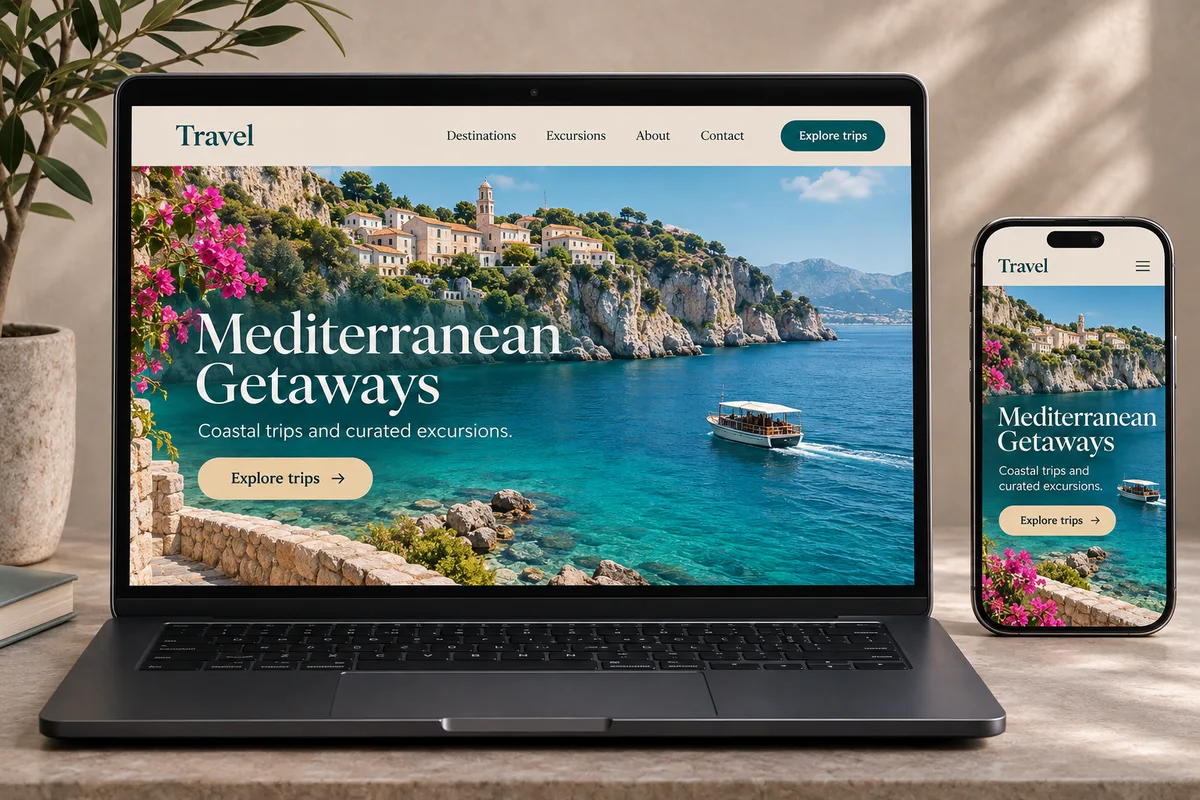
Dedicated destinations, itineraries, dates, terms and agreed prices.
Each offer can include an itinerary, dates, destination, accommodation conditions and current pricing information.
Search by destination, budget, date, trip type and party size.
Configure filters from available catalogue data, such as budget, destination, duration, holiday type and travellers.
The form sends selected trip, dates, party size and contact details to the agency.
Enquiries deliver the chosen tour, traveller count and preferred dates to an agent; confirmation remains subject to availability.
Assess partner APIs, live offers and availability; bookings may require separate confirmation.
Assess supplier exports or APIs and establish rules for updating rates and removing expired offers.
The basic website starts at €500 and includes: Tour catalogue, destination pages, imagery, filters and enquiries. Quoted separately after assessing requirements: Tour operator APIs, live prices, booking and payments. Domain, hosting and paid third-party licences are not included. We confirm the scope and final quote before starting.
Help visitors compare holidays before contacting an agent. Automated bookings, payments and offer imports depend on access rights, integrations and confirmation rules.
We build WordPress websites for businesses in Ukraine and internationally. We adapt structure, language, contact details, local payment options and integrations to your market. Before launch we test mobile layouts, forms and basic search optimisation, and prepare the owner handover.
Travellers compare destinations, dates, inclusions, transport, accommodation and payment terms. Tour pages should state what is included, possible supplements and which elements depend on suppliers. For specialist itineraries, a day-by-day plan, physical demands, group size and change policy help clients make informed decisions.
Travel agencies need truthful package inclusions, cancellation rules and availability checks. Dynamic prices and booking should only be offered after confirming supplier systems and integration permissions.
Tour availability may come from a supplier API or manual updates. Do not promise instant confirmation if an agent must verify space. Enquiries can collect dates, party size and preferences, while identity documents should only be requested through a separately agreed secure process when genuinely needed for booking.
Search architecture should follow real destinations, routes, trip types and seasonal departures. Mark expired departures rather than leaving old offers looking bookable. Test filters, mobile enquiries, accurate price conditions and cancellation details; never imply guaranteed visas or inventory that has not been confirmed.
Travel buyers need destination, dates, trip length, transport, accommodation, insurance, documents and a clear explanation of the total price. Distinguish fixed packages from tailored itineraries whose final cost depends on availability and exchange rates. Each offer should state inclusions, exclusions, change rules and who actually provides the travel services. Do not show expired rates as guaranteed or reuse someone else's photography without permission. Visa and entry advice should identify its date and authoritative source, since conditions may change. A useful destination page answers real planning questions rather than relying on generic inspirational text.
If an agency relies on operator feeds, assess API access, inventory freshness, caching rules and when a quotation becomes binding. A trip-planning form can ask for dates, budget, travellers, departure country and preferences without demanding passport information at the first enquiry. Test no-result searches, currency changes, unavailable rooms, duplicate requests and a complete notification to the adviser. Content should match the markets genuinely served, with current external travel advice linked where relevant. Integration promises and final prices must be qualified until the operator confirms availability.
Prepare an accurate service or product list, real locations and contact details, up-to-date prices or quotation rules, rights-cleared media and someone to approve the facts. Confirm whether an existing CRM, calendar, stock system or other tool provides a documented API. Unknown integrations are assessed first, not included as an unsupported promise in a proposal.
Test mobile tasks, key-template performance, forms, notifications, contact routes, internal links, sitemaps, canonicals, language URLs and indexing readiness. Check exceptional conditions too: incomplete fields, unavailable slots or items, repeated requests, failed payment and external service outages. Analytics should capture meaningful enquiries and completed actions, not merely page views.
We agree the main pages and customer journeys first, then move through layout, content, integrations and end-to-end testing. The owner can update material in WordPress after handover. Timing depends on approved assets and checked integrations; we do not advertise an arbitrary universal three-day launch.
A starting guide for this category is €500. Basic scope: Tour catalogue, destination pages, imagery, filters and enquiries. Scoped separately: Tour operator APIs, live prices, booking and payments. Domain, hosting and third-party paid services are agreed upfront; external accounts belong to the client.
Present products or services with searchable categories, specifications and quote requests without requiring online checkout.
Appointments, consultations or sessions with availability management.
Connect eligible payment providers to your online store.
Reach international customers with translated page structures, language switching, localized forms and international SEO.
Yes, via a WordPress catalogue with agreed attributes and images.
Yes, if the operator permits access to a compatible API or data export.
Yes. After handover you can update published content, services and contact details in WordPress. The owner retains the access credentials.
Tell us about your business and the functionality you need.
Message on WhatsApp ↗