
Services and routes
Organise freight, warehousing, coverage regions and transport modes.
Route, cargo and transport-mode pages explain service geography and enquiry requirements for different shipments.
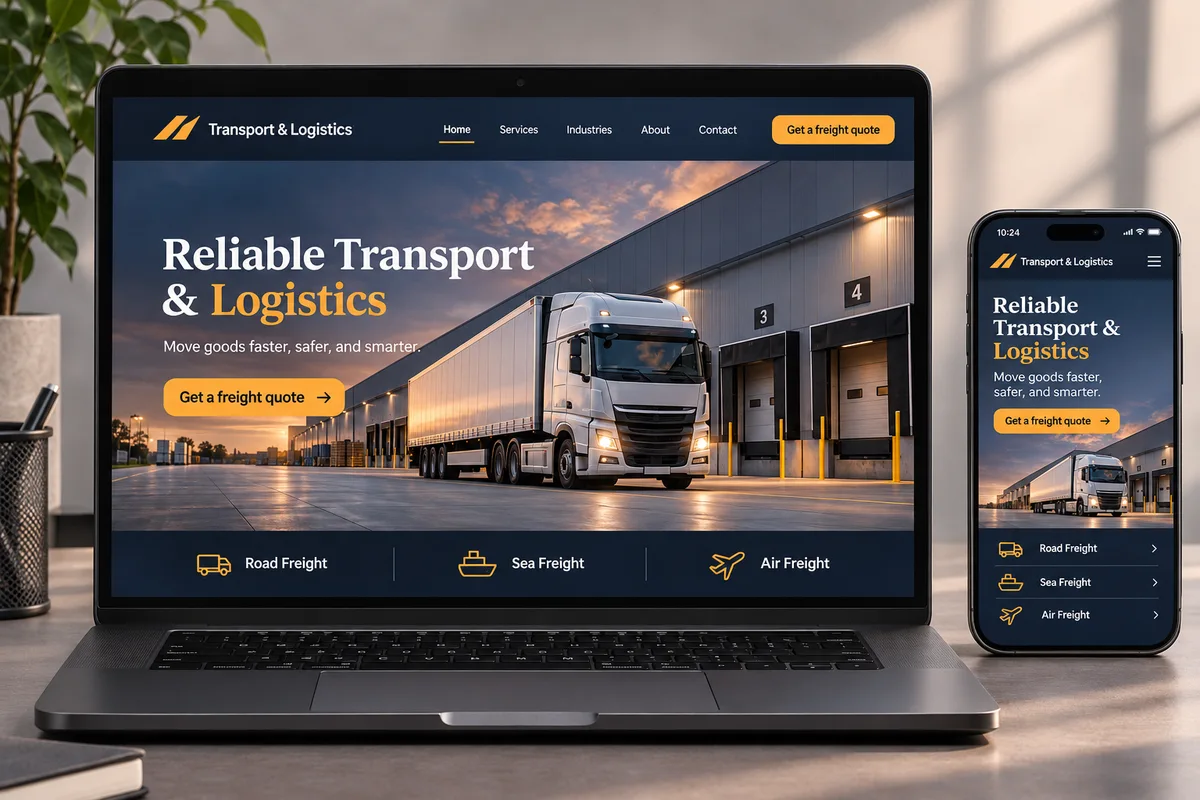
Organise freight, warehousing, coverage regions and transport modes.
Route, cargo and transport-mode pages explain service geography and enquiry requirements for different shipments.
Collect route, cargo type, weight, dimensions, timing and contacts.
A structured request delivers cargo parameters, addresses, weight, volume and preferred timing to the logistics team.
Where tariff rules exist, estimate freight costs with agreed restrictions.
Estimates can include distance, weight categories and surcharges under agreed rules. The company confirms final rates.
CRM, TMS and shipment tracking depend on compatible APIs and appropriate customer permissions.
Supported APIs can route enquiries into logistics systems and display permitted shipment statuses with appropriate access controls.
The basic website starts at €800 and includes: Shipping lanes, logistics services, coverage and quote forms. Quoted separately after assessing requirements: Freight estimators, tracking, TMS/CRM and carrier APIs. Domain, hosting and paid third-party licences are not included. We confirm the scope and final quote before starting.
Qualify enquiries and route them promptly to the responsible team. Automated rates, tracking and portals require data-source and compatibility assessment.
We build WordPress websites for businesses in Ukraine and internationally. We adapt structure, language, contact details, local payment options and integrations to your market. Before launch we test mobile layouts, forms and basic search optimisation, and prepare the owner handover.
Logistics customers search by route, cargo type, weight, dimensions and delivery window. Explain which lanes and services are genuinely supported, including storage, insurance or customs assistance only when offered. Avoid blanket promises to move any freight anywhere on a fixed schedule without checking operations.
Logistics websites should specify routes, cargo types, geography, documents and quote inputs. Avoid fixed rates when costs depend on weight, destination, customs handling and delivery windows.
A rate calculator may use origin, destination, volume, weight and surcharges, but dispatch should confirm availability when rates are variable. Tracking and TMS connections depend on APIs, authentication, accurate event states and agreed refresh rules. Shipper and consignee details require controlled handling and should not be exposed through public tracking parameters.
Organic pages should follow real trade lanes, transport modes and cargo specialisms. Test mobile quotation requests, dimensions, invalid addresses and manager handoff. Verified permits, fleet information and authorised partner details strengthen trust; never invent completed deliveries or certifications.
Logistics customers first need to know which cargo and routes a company serves, what restrictions apply, how quotes are prepared and where to track a consignment. Separate actual domestic and international lanes, transport modes, warehousing or customs support only where they are genuinely offered. Quote forms may ask for weight, dimensions, cargo type, collection and delivery addresses, dates and special handling. If a rate requires staff verification, label it as indicative rather than guaranteeing it at the first step. Useful descriptions of limitations are more credible than blanket promises of delivery anywhere.
Tracking may use an internal system or a carrier API, but review identifier formats, permissions, status refresh intervals and failure handling first. An exposed sequential tracking number must not reveal other customers' shipments. International services need current explanations of documents and responsibilities without unsupported customs guarantees. Test oversize goods, restricted categories, invalid addresses, changed routes, missing tracking events and duplicate quote requests. Search pages should describe actual transport corridors and capabilities, not generated routes the company cannot fulfil.
Prepare an accurate service or product list, real locations and contact details, up-to-date prices or quotation rules, rights-cleared media and someone to approve the facts. Confirm whether an existing CRM, calendar, stock system or other tool provides a documented API. Unknown integrations are assessed first, not included as an unsupported promise in a proposal.
Test mobile tasks, key-template performance, forms, notifications, contact routes, internal links, sitemaps, canonicals, language URLs and indexing readiness. Check exceptional conditions too: incomplete fields, unavailable slots or items, repeated requests, failed payment and external service outages. Analytics should capture meaningful enquiries and completed actions, not merely page views.
We agree the main pages and customer journeys first, then move through layout, content, integrations and end-to-end testing. The owner can update material in WordPress after handover. Timing depends on approved assets and checked integrations; we do not advertise an arbitrary universal three-day launch.
A starting guide for this category is €800. Basic scope: Shipping lanes, logistics services, coverage and quote forms. Scoped separately: Freight estimators, tracking, TMS/CRM and carrier APIs. Domain, hosting and third-party paid services are agreed upfront; external accounts belong to the client.
A scalable company website with dedicated service pages, case studies and content management for growing organisations.
Build calculators, configurators, user portals and tailored web workflows for specific business requirements.
Connect your website to CRM and external systems to automate lead delivery, order processing and status updates.
Managed access for customers, students or partners based on project requirements.
Yes, if a carrier or internal system provides authorised compatible API access.
Yes, from agreed tariffs, cargo attributes and routes; exceptions can go to a manager.
Yes. After handover you can update published content, services and contact details in WordPress. The owner retains the access credentials.
Tell us about your business and the functionality you need.
Message on WhatsApp ↗