
Training programmes
Dedicated group and personal classes with ability levels, duration and pricing.
Dedicated pages for group and personal training explain fitness levels, session duration, format and trainer profiles.
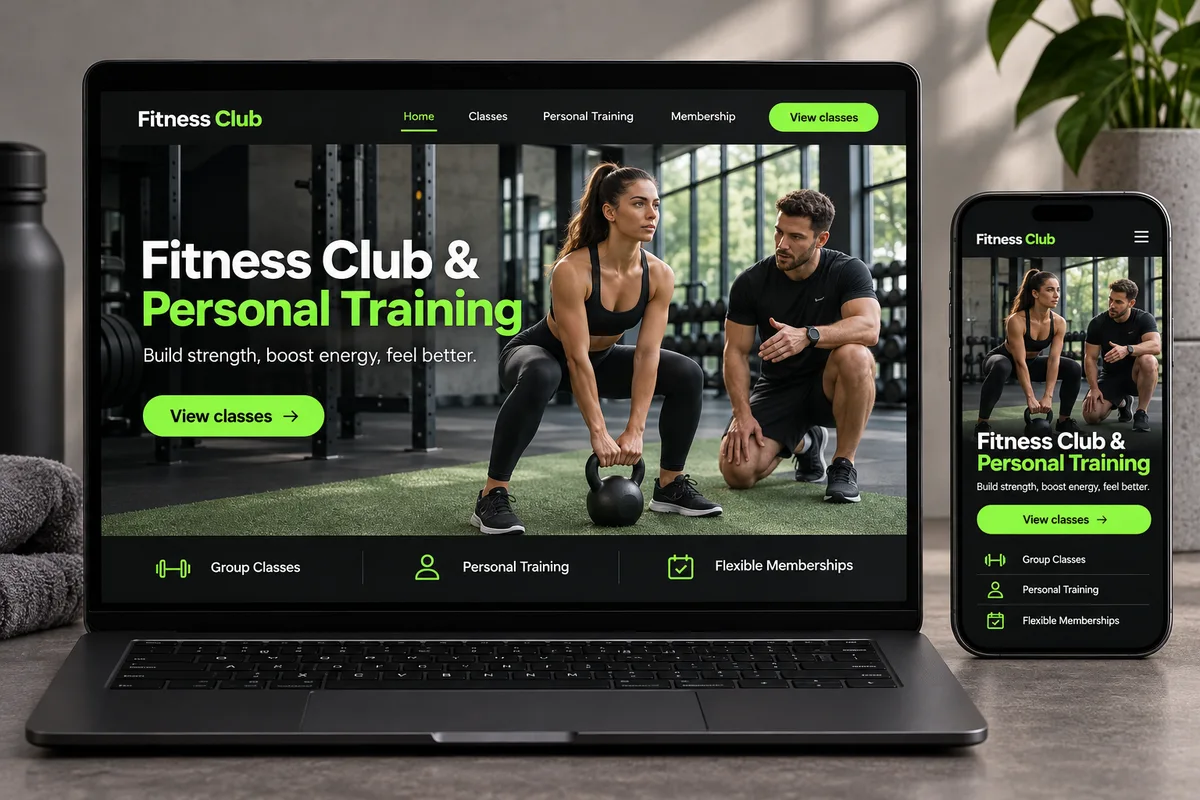
Dedicated group and personal classes with ability levels, duration and pricing.
Dedicated pages for group and personal training explain fitness levels, session duration, format and trainer profiles.
Class calendar with places, instructors and cancellation policies.
Schedules can include capacity, branches and trainers. Agree booking, cancellation and waiting-list rules separately.
Optional visit bundles, single sessions and membership renewals.
Memberships can differ in validity, session allowances and facility access, with payments configured to agreed rules.
Clients can review bookings, eligible sessions and membership status according to agreed rules.
Members can view their bookings, active passes and remaining visits where supported by the selected system.
The basic website starts at €340 and includes: Classes, trainers, informational timetable and enquiries. Quoted separately after assessing requirements: Class booking, paid passes and attendance management. Domain, hosting and paid third-party licences are not included. We confirm the scope and final quote before starting.
Combine the club's presentation with a direct path to joining a class. Expand the initial site with memberships, payments, attendance tracking and compatible internal systems.
We build WordPress websites for businesses in Ukraine and internationally. We adapt structure, language, contact details, local payment options and integrations to your market. Before launch we test mobile layouts, forms and basic search optimisation, and prepare the owner handover.
Fitness visitors compare classes, coaches, timetables, group capacity and memberships. Explain single sessions, personal training, passes, freezes and trials where offered. Multiple venues need separate locations, facilities and schedules so a customer does not reserve a class at the wrong branch.
Fitness clubs need current memberships, class schedules, trainer availability, capacity limits and rescheduling rules. Online memberships require reliable payment, confirmation and access handling.
Booking must handle capacity, instructor availability, rooms and remaining pass credits. Agree no-shows, cancellation windows, waitlists, credit deductions and refunds before automation. Turnstile or club-CRM connections require documented APIs and an independent security review rather than assuming a booking plugin handles access control.
Search pages should reflect real training programmes, coaches and branches, not clones for every 'gym near me' variation. Publish verifiable qualifications, accessibility information and current rules. Test mobile booking, full classes and membership balances; do not promise guaranteed fitness outcomes.
Fitness clubs often sell different propositions: group classes, gym access, personal training and passes, each with separate rules. Visitors need a real timetable, location, coach, duration and availability. Classes require capacity limits and possibly waitlists; personal appointments must match trainer calendars. Programme pages can explain prerequisites and what happens at a first session without promising the same physical result to everyone. Genuine facilities, staff qualifications and access policies help visitors make informed choices. Do not create pages for membership types or branches that do not exist.
Membership sales need expiry, remaining sessions, freezes, family or business rates and refund rules. Trainers working across locations require scheduling that prevents overlapping commitments. Agree whether the website collects trial-class enquiries or manages full accounts, payment and attendance. Test joining a full class, an expired pass, rescheduling and payment confirmation. If a turnstile or club management system is involved, check APIs and fallback access rules first. Local SEO should reflect actual addresses, amenities and opening hours rather than fictional branches.
Prepare an accurate service or product list, real locations and contact details, up-to-date prices or quotation rules, rights-cleared media and someone to approve the facts. Confirm whether an existing CRM, calendar, stock system or other tool provides a documented API. Unknown integrations are assessed first, not included as an unsupported promise in a proposal.
Test mobile tasks, key-template performance, forms, notifications, contact routes, internal links, sitemaps, canonicals, language URLs and indexing readiness. Check exceptional conditions too: incomplete fields, unavailable slots or items, repeated requests, failed payment and external service outages. Analytics should capture meaningful enquiries and completed actions, not merely page views.
We agree the main pages and customer journeys first, then move through layout, content, integrations and end-to-end testing. The owner can update material in WordPress after handover. Timing depends on approved assets and checked integrations; we do not advertise an arbitrary universal three-day launch.
A starting guide for this category is €340. Basic scope: Classes, trainers, informational timetable and enquiries. Scoped separately: Class booking, paid passes and attendance management. Domain, hosting and third-party paid services are agreed upfront; external accounts belong to the client.
A professional WordPress website for your business or practice, with up to five pages, easy editing and a clear enquiry journey.
Appointments, consultations or sessions with availability management.
Paid access and recurring billing subject to supported payment services.
Managed access for customers, students or partners based on project requirements.
Yes, the calendar can account for class capacity and booking rules.
Yes, after agreeing validity, renewal rules and payment providers.
Yes. After handover you can update published content, services and contact details in WordPress. The owner retains the access credentials.
Tell us about your business and the functionality you need.
Message on WhatsApp ↗